Furniture · Materials & Craft
What to Know About Vermont Furniture Designs’ Solid-Wood Craftsmanship
A piece of solid-wood furniture carries a record of its material: the grain’s changing direction, the small variations in color, the way a drawer meets its frame. Those details are more than decoration. Wood selection, joinery, finishing, and made-to-order construction all influence how a piece looks, feels, and performs in a home.
Understanding those choices can help you assess Vermont Furniture Designs furniture beyond its silhouette—and plan for the care it may need over time.
Start with what “solid wood” tells you—and what it doesn’t
In a room, wood is both structure and surface. It supports a table’s weight, gives a chest its shape, and catches the shifting light of morning and evening. When a furniture description identifies solid wood as a primary material, it means the piece is made with wood rather than relying entirely on a wood-look surface over a different core. That is useful information, but it is only the beginning of an assessment.
“Solid wood” does not, by itself, identify the species, explain how every component is constructed, or guarantee a particular level of durability. A piece may combine wood parts in different ways, and construction details matter. Ask which species are available, what material is used for the frame, top, drawer fronts, and other components, and whether the stated material applies throughout the piece or to selected elements.
The Vermont Furniture Designs examples described here include solid cherry, maple, and walnut options for some tables, as well as solid hardwood in other designs. Those species have distinct colors and grain patterns. Cherry is often associated with a warm, reddish-brown character that deepens with exposure to light; maple generally has a lighter, subtler appearance; walnut is commonly chosen for its deeper brown tones and pronounced variation. Natural wood varies from board to board, so a sample can help with broad expectations, but it cannot predict every detail of the finished piece.
That variation is part of the material’s identity. Grain may run straight in one area and curve or ripple in another. A knot, mineral streak, or shift in tone can be a natural feature rather than a flaw. If a highly uniform appearance is important, discuss what variation is likely and how boards are selected and arranged. If the appeal is a more individual, organic surface, ask how the maker handles the natural character of the wood.
Wood also responds to its surroundings. Changes in humidity can cause it to gain or lose moisture, and the material may expand or contract as seasons change. This is a normal characteristic of wood, not a sign that a piece has failed. Sensible indoor conditions and careful placement help reduce extreme movement, though they cannot stop the material from responding to its environment.
Read the design through its construction
Good furniture is often quiet about its engineering. A table appears to be a plane held above the floor; a chest presents a tidy arrangement of drawers. Yet the way its parts meet determines much of its stability, usefulness, and ability to withstand repeated handling. Looking closely at joints, drawer movement, leg attachment, and the relationship between top and base can reveal more than a style label alone.
Joinery is the method used to connect pieces of wood. Different joints serve different purposes, and no single technique is automatically best for every location. A corner, a drawer, a leg, and a long rail each face different forces. When reviewing a furniture description, look for specific information about construction rather than assuming that a traditional appearance reveals exactly how a piece is assembled. If the details are not stated, asking about them is reasonable.
For drawers, useful questions include how the drawer box is joined, how it is supported, and whether the slides are specified. Smooth travel matters in daily life, but so does alignment: a drawer should open and close without twisting, catching, or requiring an awkward pull. Some construction details are provided for particular designs; others may need confirmation directly from the maker or retailer.
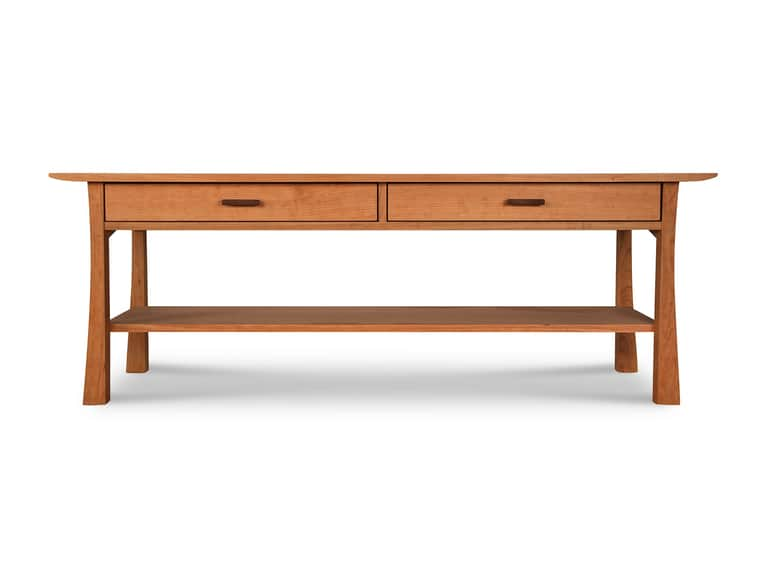
The same practical attention applies to tables. A narrow-depth design can make sense where circulation space is limited, while a wider top may better suit a room with generous floor area. The Burlington Shaker 2-Drawer Coffee Table, for example, is described as handcrafted to order in Vermont from solid cherry, maple, or walnut, with two wide drawers and a narrow profile. Those details help explain its intended use: a surface and storage in a footprint that can work in tighter spaces.
Another design, the Contemporary Craftsman Console Coffee Table, is described as made to order in Vermont from solid hardwood, with two drawers, walnut pulls, and an eco-friendly oil finish. Its Arts and Crafts influence is expressed through restrained form and material rather than elaborate ornament. In both examples, the style is only one part of the story; dimensions, storage, and construction affect how the piece will function in a particular home.
When assessing craftsmanship in person, inspect the piece from more than one angle. Check that it sits level, that joints appear consistent, and that doors or drawers meet their frames evenly. Look at the undersides and back surfaces where accessible, not just the areas most visible from across a room. A finish should feel appropriate to its intended use, while edges should be comfortable to touch and free from rough or unfinished patches.
Finishes are a working surface, not just a color choice
A finish changes how a piece of wood meets the world. It can influence sheen, color, touch, and the surface’s response to everyday spills or handling. Descriptions for Vermont Furniture Designs pieces include oil finishes, natural oil finishes, and hand-rubbed oil finishes. The product details describe these finishes as protecting the wood while enhancing its natural appearance. The precise care routine, however, depends on the specific finish and should be confirmed for the piece you choose.
Oil finishes are often valued for allowing the grain to remain visually prominent and for producing a less glossy appearance than some film-forming finishes. “Oil finish” can refer to different products and application methods, so the term alone does not establish how resistant a surface is to water, heat, alcohol, or abrasion. Ask for the manufacturer’s care instructions, including how to clean the surface, whether maintenance oil is recommended, and what substances should be kept away from it.
For routine care, begin gently. Dust with a soft, clean cloth, and wipe spills promptly rather than letting liquid stand. Avoid abrasive pads, strong solvents, and household cleaners unless the maker specifically approves them. A coaster or protective mat can help guard a tabletop from rings, heat, or scratches. These are practical precautions, not a substitute for the product’s own care guidance.
Placement matters too. Prolonged direct sun can change the appearance of wood, and strong heat or very dry air can contribute to movement. Keep furniture away from heating vents, radiators, and other intense heat sources where possible. Try to maintain reasonably stable indoor humidity, especially during seasonal transitions. A wood surface may naturally change in tone as it ages and is exposed to light; this gradual evolution is different from damage caused by neglect or unsuitable cleaning.
Finish maintenance should not be improvised. Applying a product that is incompatible with the existing finish may leave the surface uneven or difficult to repair. Before using wax, polish, oil, or a cleaner, check the maker’s recommendations. If a mark or scratch is significant, describe it to a furniture-care professional or the manufacturer before attempting a repair. A small, informed intervention is often safer than treating a solid-wood surface as though all finishes behave alike.
Made to order: a different rhythm of ownership
Made-to-order furniture follows a different timetable from a piece taken directly from warehouse stock. Construction begins in response to an order, which can allow a design to be prepared for a specific customer rather than selected from a completed inventory. It may also mean a longer wait. Vermont Furniture Designs product descriptions identify several pieces as made to order or handcrafted to order in Vermont, but the lead time can vary by design and circumstances.
Before placing an order, ask for the current estimated production and delivery schedule. Confirm whether the estimate includes shipping, whether delivery arrangements affect timing, and what happens if a requested wood or configuration is unavailable. If the furniture is needed for a move, renovation, or planned event, build in extra time. A production estimate is a planning tool, not necessarily a guaranteed arrival date.
Customization should be approached with equal care. If a design offers choices of wood, finish, size, or configuration, write down the selections and confirm them before the order is finalized. Check the room’s dimensions, but also measure doorways, stairs, hallways, and turns along the delivery route. A large chest that fits a bedroom may still be difficult to maneuver through an older home’s narrow passage.
Made-to-order does not automatically mean every feature is customizable. Establish exactly which options are available, what they change, and whether an altered specification affects the delivery timetable or return terms. Clear expectations help prevent a gap between the piece imagined and the one that arrives.
The process can encourage a more deliberate relationship with furniture. Instead of choosing only by immediate availability, a buyer has time to consider the room, the materials, and the work the piece is expected to do. That pause can be valuable. It gives the practical questions—dimensions, storage, finish care, and placement—a chance to stand beside questions of color and style.
Make the room part of the decision
A well-crafted object still has to live somewhere. Light, traffic, nearby materials, and everyday habits shape how furniture will be used. A coffee table in a busy family room faces different demands from a small table used mainly for display. A chest in a bedroom may be opened dozens of times each week; its drawer layout and height can matter as much as its finish.
Start by measuring the available floor area and the furniture itself. Leave enough room to walk around the piece and use its drawers or doors without obstruction. For a coffee table, consider the reach from the sofa and whether its edges interfere with movement. For a narrow table, think about what will rest on its surface and how much storage is genuinely useful. A compact footprint can solve a space problem, but only if the piece’s proportions suit the room.
Then consider the demands of the household. Pets, children, frequent entertaining, and work-from-home routines all affect wear. A surface that will hold cups, books, and devices needs a clear care plan. If a piece will be used heavily, ask how the finish responds to common household conditions and which protective measures are recommended. The right question is not whether furniture can remain untouched, but whether its materials and upkeep fit the life around it.
Wood species and finish should also be considered alongside existing furnishings. Matching every wood tone precisely can be difficult, particularly because species age and finishes vary. Instead, look for a thoughtful relationship: similar warmth, a deliberate contrast, or a shared visual quality such as a simple profile. Repeating one material note elsewhere in a room—a frame, shelf, or smaller accessory—can make a contrast feel intentional without creating a perfectly matched set.
A practical checklist before you choose
Descriptions can introduce a piece, but a few focused questions help turn broad claims into useful information. Keep a written record of answers, especially when comparing several designs or ordering a customized item.
- Material: Which wood species are available, and which parts of the piece are made from solid wood?
- Construction: What joinery or assembly details are specified for the frame, drawers, legs, and other stress points?
- Finish: What finish is applied, and what are the recommended cleaning and maintenance steps?
- Dimensions: What are the complete measurements, including depth, height, and any overhangs or protruding hardware?
- Use: Is the design suited to the storage, traffic, and daily activities expected in the room?
- Order details: What is the current production estimate, and which choices can be confirmed before construction?
- Delivery: Will the piece fit through the route into the home, and what delivery or assembly arrangements apply?
- Care: Which cleaning products, protective measures, or repair procedures does the maker recommend?
These questions are not an attempt to turn furniture into a technical examination. They are a way to understand what the object asks of its owner and what its owner can expect in return. A table’s lines may first catch the eye, but its surface, construction, dimensions, and care requirements are what shape its everyday presence.
Craftsmanship is visible in use
Solid-wood furniture is often discussed in terms of permanence, but longevity is not a single quality bestowed by a material label. It grows from suitable design, sound construction, careful finishing, appropriate use, and maintenance. The wood may bring natural variation; joinery connects its parts; the finish meets the room’s daily activity; and the owner’s habits help determine how the surface changes over time.
Vermont Furniture Designs’ descriptions emphasize solid wood or hardwood, oil finishes, handcrafted work in Vermont, and made-to-order production for selected pieces. Those details provide a starting point for understanding the furniture, not a replacement for asking about the exact model. Product specifications vary, and details for one table or chest should not be assumed to apply to another.
In the end, a good choice is one that makes sense in the life of a room. A table should fit the path people take through the space. Drawers should hold what they are meant to hold. A finish should have a care routine the household can follow. And the wood’s natural character should be something the owner is prepared to live with—not as a showroom ideal kept forever unchanged, but as a material that responds to light, air, touch, and time.
Seen this way, craftsmanship is neither mystery nor marketing phrase. It is a collection of decisions that can be examined: the species chosen, the parts joined, the surface protected, and the piece made for a particular purpose. Understanding those decisions makes it easier to choose thoughtfully—and to care for the furniture once it becomes part of the landscape of home.